
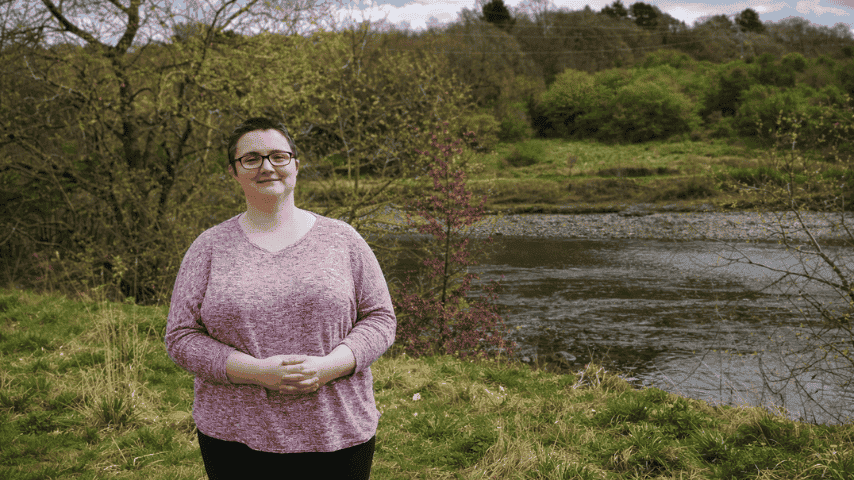
When I was younger, I already knew I was different – I didn’t yet have the language to explain it.
I grew up with physical disabilities, including ataxia, which affected my balance and coordination, and hearing loss, which shaped how I experienced the world and connected with other people. School was difficult. I was never particularly academic, and I didn’t do well with exam pressure. Even so, I always sensed I was neurodivergent. That understanding didn’t come officially until much later – I was diagnosed as autistic at 31.
That late diagnosis brought a mix of relief and grief. Relief, because so much finally made sense. Grief, because it explained years of feeling out of step, misunderstood, or quietly struggling without support. Friendships didn’t come easily to me. I often felt on the edges rather than at the centre. But one thing was always true: I cared deeply about people.
Helping others became my way of connecting with the world.
Volunteering was where I first felt purposeful and grounded. I volunteered with Sense, supporting people with complex disabilities, including deafblindness. I went on respite holidays with individuals who needed care and companionship – experiences that were joyful, challenging, and deeply human. One of those holidays took place on a boat, pushing me far outside my comfort zone and teaching me a lot about trust, adaptability, and shared responsibility.
I also volunteered as a befriender with the National Autistic Society, an experience that shaped me more than I realised at the time. For five to six years, every Saturday, I spent a few hours with the same little girl. We went swimming, bowling, and doing activities at her pace. Every trip ended the same way – at McDonald’s. That routine mattered. It was predictable, safe, and something she could rely on.
At the time, she was described as the sibling of a child with severe autism, someone whose needs were quieter and therefore often overlooked. Later, she too was diagnosed as autistic. Looking back, so much made sense – her need for structure, her sensitivities, the way she thrived when she felt secure. Those Saturdays taught me the power of consistency, of simply showing up, and of listening without trying to fix. Long before my own diagnosis, I was learning what neurodivergent lives really look like.
Working with children felt like a natural next step. I qualified at Level 3 in Childcare and went on to work in nurseries and preschools, supporting children in their earliest years. I also worked as a children’s holiday representative, combining care, creativity, patience, and flexibility. I loved being someone who noticed the quieter child, the anxious one, the one who needed a little more time.
In 2020, everything changed.
After catching Covid, I was diagnosed with long Covid, and I could no longer work in a children’s day nursery. Losing that role was devastating. It wasn’t just a job – it was my routine, my independence, and a big part of who I was.
But in that enforced stillness, something unexpected began to grow.
The Adventures of Compost
The Adventures of Compost grew from a very real place.
When I was younger, a family friend had a cat called Compost. Like many children, I loved writing stories, and Compost appeared in those early ideas – fragments of imagination that never quite found a way to become something more.
Years later, during the loss and adjustment that came with long Covid, Compost the Cat returned – this time as a literary character. Writing became a way to reconnect with creativity, purpose, and the joy of storytelling.
Because of my own lived experience of disability and neurodivergence, it was important to me that these values were reflected in the stories. That’s why the Compost books focus on disability, inclusion, and friendship – showing children that everyone is different, everyone belongs, and kindness and understanding matter.
Compost isn’t just a character. He’s a quiet companion for children carrying big feelings, trauma, or differences.
Choosing a Different Publishing Path
When it came to publishing The Adventures of Compost, I knew traditional publishing wasn’t for me. I didn’t want to keep being knocked back, reshaping my work to fit expectations that didn’t feel right – especially when I already had a brilliant illustrator and a clear vision.
If it hadn’t been for Google, I probably wouldn’t have published at all.
Learning about self-publishing changed everything. It reframed rejection for me. I remember discovering that J.K. Rowling was rejected 12 times before Harry Potter was published – proof that rejection isn’t a measure of worth or talent.
That realisation sparked something bigger.
If I could publish my own book ethically and independently, I could help others do the same – writers with powerful stories who didn’t fit neatly into traditional boxes.
That’s how Taylor & Wood Publishing was born.
Taylor & Wood Publishing exists to support authors through self-publishing with care, transparency, and respect – empowering people to tell their stories without losing their voice, particularly those whose experiences are underrepresented.
The Nightshaders Adventures
Alongside Compost, another deeply meaningful project emerged: The Nightshaders Adventures.
This project grew through collaboration – and through Rosie, a child with a life-changing condition whose imagination, courage, and love of stories left a permanent mark on my heart. Rosie had always dreamed of becoming an author, but her circumstances meant that dream felt painfully out of reach.
Together, we changed that.
The Nightshaders Adventures became a way to make her dream come true. Rosie helped shape the story, the characters, and the world – proving that creativity doesn’t disappear because life is hard, and that dreams still matter, no matter how fragile time might feel. Helping her see her ideas come to life in a real book was one of the most meaningful things I have ever done.
The story itself follows magical dogs who fly through the night, navigating unfinished magic, inherited grief, and the quiet strength found in friendship and trust. But beneath the fantasy is something deeply real: the belief that stories can give children agency, joy, and a sense of legacy.
For Rosie, this wasn’t just about a book.
It was about being seen.
About being heard.
About leaving something of herself in the world.
For me, it reaffirmed why I do this work at all.
I wasn’t the academic success story. I wasn’t diagnosed early. I didn’t follow a straight or easy path. But every challenge – disability, isolation, volunteering, care work, illness – added something essential to the stories and the business I have built.
I write, publish, and create the way I live: gently, honestly, and with room for difference.
And that, finally, feels like enough.