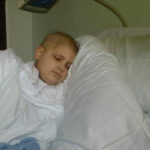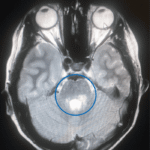
My story begins in childhood, when life changed in a way none of us expected. I was six when I was diagnosed with a brain tumour, and although the doctors couldn’t remove it because of where it was positioned, they operated to relieve pressure in my head caused by hydrocephalus. Years later, when I was eleven, the tumour began to grow again. I faced a biopsy that went deep into my brain and received a rare diagnosis – a tanycytic ependymoma. Treatment meant chemotherapy and radiotherapy, months in hospital, and more time away from school than in it.
The treatment saved my life, but it also left behind an acquired brain injury – memory difficulties, anxiety, fatigue, and challenges with processing and learning. I didn’t understand any of that at the time. I only knew that everything suddenly felt harder for me than it seemed for everyone else. At an age when you’re meant to be figuring out who you are, I felt like I was already falling behind.
As I moved back into education, those challenges appeared in small ways that had big consequences. I remember struggling to spell a classmate’s name in primary school. It should have been a forgettable moment, something that happened to plenty of children. But that mistake became the start of years of bullying that followed me into secondary school. Every time I tried to explain why I was struggling, it was brushed off with, ‘It’s just the brain injury,’ rather than exploring anything deeper. I didn’t have the words for what I was experiencing, and nobody else seemed to either.
I grew up feeling different without knowing why. I felt separate from my peers, unsure where I fitted, constantly trying to keep up while never quite managing to. I was alive, but I didn’t know who I was supposed to be.
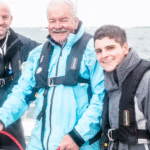
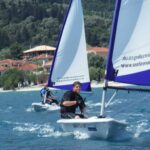
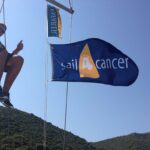
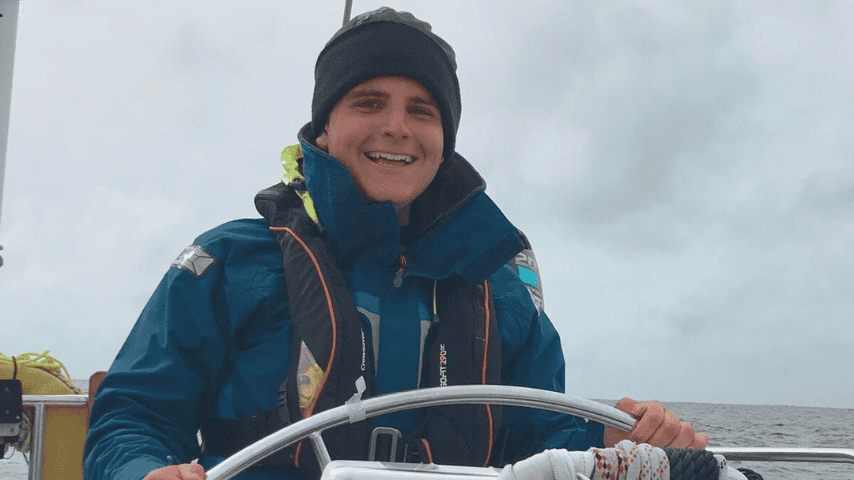
Sailing entered my life when I was fourteen through the Ellen MacArthur Cancer Trust, and it changed everything. Being out on the water felt like breathing again. I wasn’t the ill kid or the one who struggled in class. I was part of a crew, learning by doing rather than failing in a classroom. Navigation taught me maths. Tides taught me science. Communication taught me English without me ever realising. Sailing gave me freedom, belonging, and a place where my mind could settle. I returned year after year, eventually volunteering and working towards leadership. It was on boats that I began to discover myself again.
Adulthood brought a new set of challenges. I entered the working world determined to succeed, to contribute, to prove myself. I worked in media and later in charities, determined to build a life that wasn’t defined by illness. But the barriers I faced were invisible to most. I struggled with spelling and writing and relied on tools like Grammarly or AI support, but in the public sector those tools couldn’t be used because of lengthy security restrictions. In other roles, I had to buy them myself because employers wouldn’t. I found open offices overwhelming and needed quieter spaces to concentrate, yet even that was treated like an unreasonable request.
Then came a moment that shifted everything. While working in a well-known media organisation, I joined an online talk where Siena Castellon MBE and founder of Neurodiversity Celebration week, spoke about neurodiversity and masking . Listening to her speak, I felt something crack open. Every experience I’d carried without explanation suddenly made sense. I realised I wasn’t alone. I realised I was neurodivergent, and I had been masking all my life.
In the weeks that followed, I began to pursue a diagnosis properly – not for a label, but for clarity. I wanted to understand what I had been living through, what parts belonged to my acquired brain injury, and what parts reflected something that had always been there. It was the beginning of unmasking, of understanding myself not as broken but as different. A difference with value.
I tried to speak to management about the support I needed, but I wasn’t listened to. Despite hard work and commitment, my contract wasn’t extended. I didn’t fit the media image they wanted. It hurt deeply, not because I wasn’t capable, but because I wasn’t seen.
But the story didn’t end there. Eventually, I did find a supportive employer in London, surrounded by some of the most talented and creative individuals I have ever worked with. For the first time, I felt understood in a workplace. I was able to grow, contribute, and be valued as myself rather than as someone pretending to be something they weren’t.
It was during this period, with genuine support around me, that I completed the diagnostic process and was formally diagnosed with ADHD and autism. That late diagnosis was life-changing. It helped me understand years of masking, the overlap with my acquired brain injury, and why education, friendships, and work had felt so different for me compared to others.
That clarity didn’t erase the past, but it gave it meaning. It showed me what inclusion looks like when it is done well – when adjustments are respected, when strengths are recognised, and when you are able to work in a way that suits your mind. And it was precisely because of that positive experience that I realised something important – real change is possible. I saw how much difference the right culture can make, and how much further the world still needs to go.
That was the turning point. I had a permanent role, stability, and a team I respected deeply, but something inside me knew I needed to build something bigger than myself. I wanted to create the change I had spent a lifetime searching for – a space where others wouldn’t have to fight the same battles alone. Leaving wasn’t about walking away from a good place. It was about stepping towards what I knew I needed to build.
The idea began as conversations – long discussions with someone training to be a counsellor, who later became the charity’s treasurer for a while. At first we were exploring the idea of a sailing campaign: Around Britain for Neurodiversity – a journey designed to raise awareness, build allyship, and spark national conversation. We imagined sailing into ports around the UK, sharing lived experiences, and opening up dialogue about what truly needs to change.
But the more we talked, the more something became clear. Awareness on its own isn’t enough. A campaign ends. People’s lives don’t. We realised there was an opportunity, and a responsibility, to build something far more substantial – something that didn’t fade once the spotlight moved on. There was a moment when we looked at one another and said, almost at the same time, ‘We could do more.’ That was the moment The Neurodivergence Project began to take shape.
As I started speaking about the idea with others, something powerful happened. People connected with it. They recognised the need. They wanted to help build it. Trustees came forward – individuals with their own lived experience, professional insight, passion for inclusion, and belief in what could be created. They saw the value not in me alone, but in what could be built collectively – a charity rooted in community rather than hierarchy. A place where change isn’t spoken about, but lived.
That is how The Neurodivergence Project began – not from a single person, but from a group of people who all believed the same thing: Change is needed. And together, we can build it.
My motto has stayed with me my whole life:
Never Give Up – Never Say Never – Never Stop Dreaming.
To me, it means choosing a different path when the first one blocks you. It means refusing to accept that adversity defines your value. It means building something new when the world tells you that you don’t belong.
If I could speak to my younger self now – the boy in the hospital bed, or the teenager walking into school feeling small – I would say: You are not the problem. Keep going. Talk to people. Trust your instinct. Advocate for yourself. Things will change.
What I hope people take from this first blog is a feeling of possibility. That your story matters. That challenges don’t make you weak – they make you human. That belonging isn’t something you have to earn by pretending to be someone else.
This is not the end of the story. It is the beginning.