
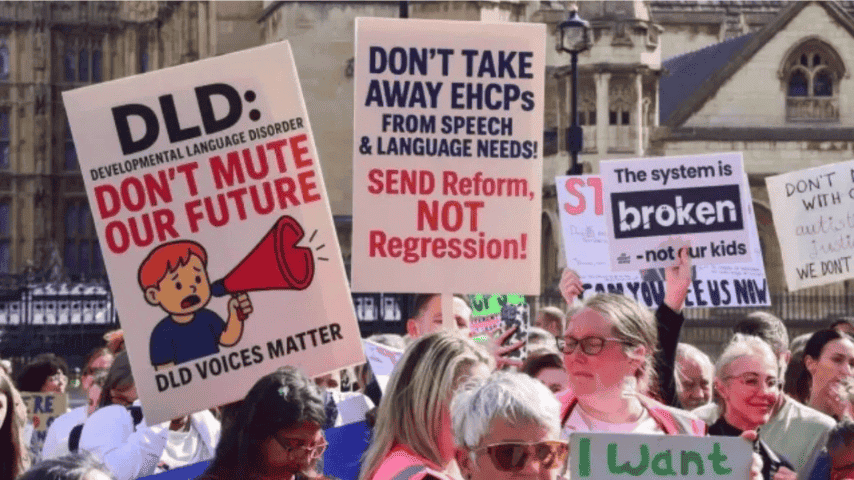
Imagine being 11 years old, walking into a huge secondary school for the first time, and being told: “We’ll see if you still qualify for support.” For children with Special Educational Needs and Disabilities (SEND), that’s not hypothetical. That’s terrifyingly real. Autism, ADHD, dyslexia, and other additional needs do not vanish at a birthday. Support shouldn’t either.
Yet reports suggest the government may reassess children at the point of transition to secondary school – a profoundly challenging moment academically, socially, and emotionally. The concern is that thresholds may tighten exactly when children most need continuity and stability. For neurodivergent pupils, the move from small, familiar classrooms to larger, less personal environments can heighten anxiety and vulnerability. This is precisely when support should be strengthened – not withdrawn.
SEND Reform: Ambitious but Controversial
The Labour government’s SEND white paper, published on 23 February 2026, promises a transformative £4 billion investment over three years:
- Inclusive Mainstream Fund (£1.6 bn): Schools will receive funding to support children locally, rather than automatically sending them to special schools.
- Experts at Hand network (£1.8 bn): Regional specialists, from speech and language therapists to SEND-trained teachers, will be available on-demand.
- Restructured EHCPs: Legally binding plans will be reserved for the most complex needs, with individualised support plans for others.
- Teacher training and early intervention: Every teacher will receive training to identify and support additional needs, backed by dedicated funding.
These proposals are encouraging, particularly the focus on mainstream inclusion and early intervention. But the devil is in the detail. Many families fear that legal protections could be weakened, that inclusion without infrastructure becomes tokenistic, and that financial sustainability may overshadow child-centred support. Reform must not be disguised rationing.
The Nordic Lesson
Looking abroad, Nordic countries – Denmark, Norway, Sweden, Finland -offer a model worth emulating. In these systems:
- Inclusion is embedded, not added: Students with SEN learn alongside peers with adaptive support built into classrooms.
- Localised funding: Municipalities decide allocations, allowing flexible, needs-based provision.
- Early identification and prevention: Small-group interventions and classroom adaptations prevent later escalation.
- Teacher autonomy and collaboration: Inclusive practices are pedagogical norms, not optional extras.
- Holistic student health: Family involvement and wellbeing are integrated into transitions and daily schooling.
The UK still struggles with bureaucracy-heavy EHCPs, funding bottlenecks, and under-resourced mainstream schools. The lesson is clear: inclusion and achievement are not opposing priorities; they are mutually reinforcing when adequately supported.
Children Have Changed – Has Education?
We often hear, “Children weren’t like this in my day.” But a 1926 classroom and a 2026 classroom are not comparable. One hundred years ago: information was scarce, diversity was hidden, authority was unquestioned. Today: children navigate hyperconnected, globalised realities. They engage with social media, climate debates, gender identity, mental health, and inequality before lunch. They ask questions because they see contradictions; they challenge because they see alternatives.
Expecting them to behave like factory-era students is not just unrealistic – it’s counterproductive. Excessive homework, rigid discipline, and one-size-fits-all timetables suppress curiosity, punish creativity, and exacerbate anxiety. Modern education must teach digital literacy, emotional intelligence, project-based learning, collaboration, and respect for difference. Trauma-informed practice is essential: recognising that children arrive at school with vastly different backgrounds, responsibilities, and stresses.
Inclusion Without Infrastructure is Empty Rhetoric
Inclusion works only if staff are trained, class sizes are manageable, and funding is sufficient. Under-resourced schools cannot deliver the personalised, trauma-informed support that children need. Many families report meaningful assistance arrives only after legal battles – a system where paperwork outweighs care. Reform must not repeat this cycle. Stability, early intervention, transparency, and workforce investment are non-negotiable.
Labour’s Moral Responsibility
The Labour Party was founded on a moral imperative: stand with those who have least power. Children with SEND are among society’s most vulnerable. Reform must reflect this principle. Weakening legal protections, prioritising cost savings, or streamlining support at the expense of human care would betray Labour’s heritage. Families must trust that decisions are made with them, not about them. Teachers must be trained, supported, and resourced. Funding must follow need, not administrative convenience.
Education is Britain’s True National Strategy
Some argue that immigration defines the country’s future. The truth is education does. Weak schools produce skills gaps, inequality, mental health crises, and social fragmentation. Strong schools integrate newcomers, foster innovation, and build cohesion. Immigration is cyclical; education is generational. Underfunded classrooms today create societal instability tomorrow. Investing in children is investing in the nation.
Moving Forward, Not Back
Reform is necessary, but only if it moves forward:
- Earlier intervention, not delayed diagnosis.
- Funded, inclusive mainstream schools, not stretched classrooms.
- Specialist expertise embedded system-wide, not siloed.
- A culture that values difference, not merely manages it.
- Curricula that reflect 21st-century realities, including digital literacy, creativity, and wellbeing.
Simplification that strips support is not reform – it is retreat. A modern Britain recognises that every child, neurodivergent or not, contributes to the future workforce, the future innovators, the future leaders. Constraining them constrains Britain itself.
The Golden Age of Education
The golden age of Britain will not be measured by GDP or nostalgic ideals of obedience. It will be measured in classrooms where:
- Every child is supported, seen, and heard.
- Inclusion is meaningful and practical.
- Teachers are trained, resourced, and respected.
- Support is proactive, not reactive.
- Diversity of thought, background, and cognition is celebrated.
SEND reform is more than policy. It is a moral and strategic imperative. Moving backwards must never be an option. Every child deserves dignity, opportunity, and a future unshackled by bureaucracy.
If Britain gets this right, we secure not just exam results, but confidence, mental health, innovation, and social cohesion. Reform is an opportunity – an opportunity to make inclusion a national strength. Let us rise to it.