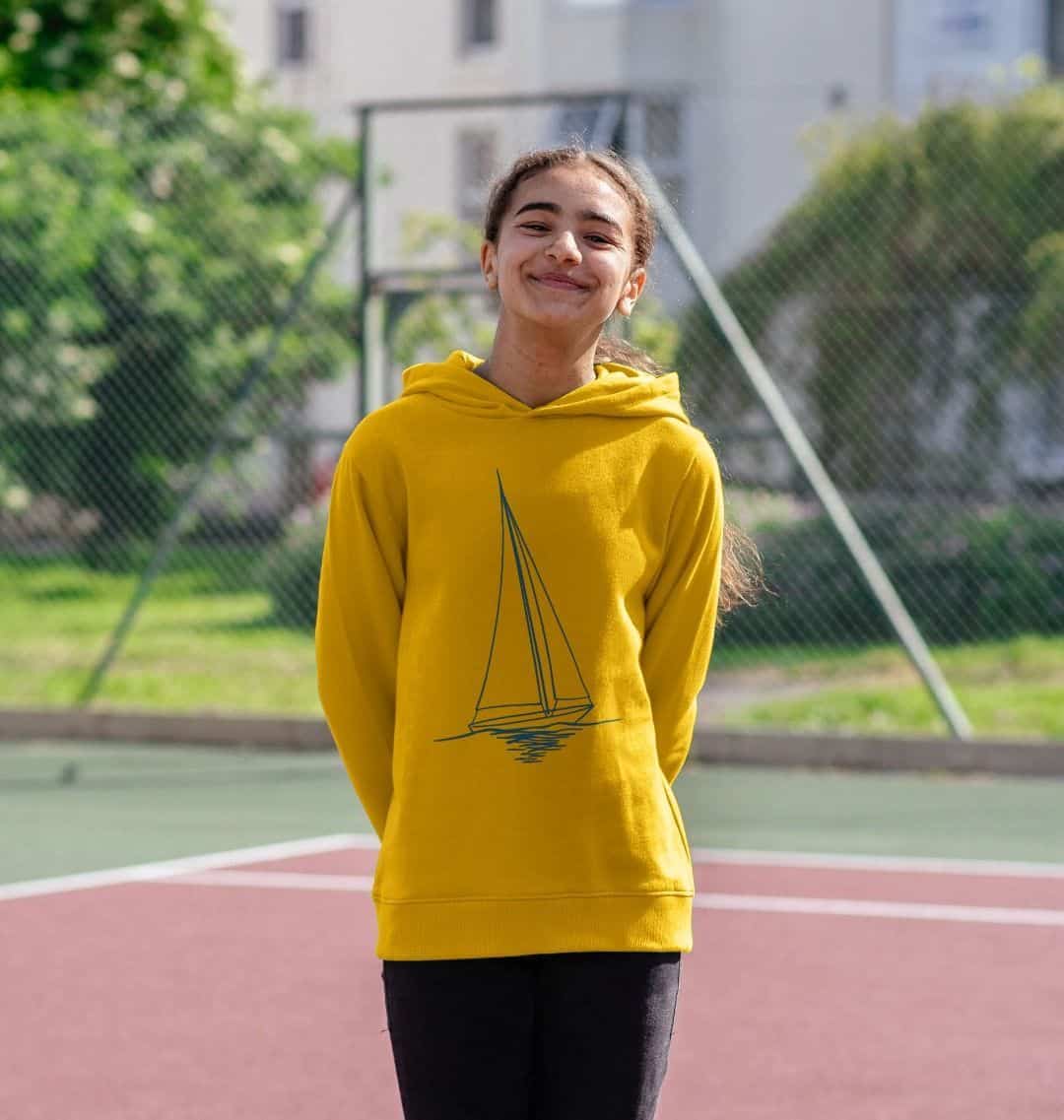
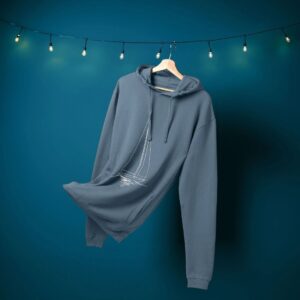
There is a relaxed feeling to this hoodie the moment I pick it up. Soft organic cotton and an easy fit. The boat blue outline feels bold in a way that does not try too hard. Simple coastal style that works with jeans, joggers or layered on colder days. It all feels very effortless.
Each hoodie is made to order using renewable energy. No bulk stock and no excess waste. Just one piece created when it is actually wanted. It may take a little longer to arrive and I find that waiting feels worthwhile. It avoids overproduction and feels like part of a better way of buying clothes.
When the fabric has lived its life and feels finished it can be sent back and remilled into something new instead of ending in landfill. A full loop rather than a throw away moment. It feels like a quiet promise to use what we have with intention.
Refunds are only offered if an item arrives damaged. Full details are listed in the refund policy before ordering.
Caring for Printed Clothing
Printed clothing keeps its colour and softness for longer when it’s washed with a little care. It’s easy for a favourite piece to fade before its time, and small steps in the wash can help it stay looking fresh.
Washing
Turning the garment inside out before it goes into the machine is one of the simplest ways to protect the print. It limits friction, helps slow down fading, and lets the fabric move more gently through the cycle.
A cold wash is kinder than hot water. Unless the fabric is heavily soiled, cold water cleans just as well while helping the colours and printed areas last. It also uses less energy.
Mild detergents are all that’s needed. Harsh detergents or bleach can damage both the fabric and the printed design, especially with repeated use. For stains, a small amount of stain remover on the mark is better than treating the whole garment with strong chemicals.
It helps to wash similar items together. Soft fabrics with soft fabrics reduce pilling and keep printed areas from cracking or peeling. Heavy items – like towels – are best washed in a separate load.
Drying
Heat has the same effect in drying as it does in washing – it can change the look and feel of the fabric. Drying on a low heat protects the print. When there’s time, air drying lets the garment hold its shape and keeps the finish smooth.
Avoid ironing directly over printed designs. Heat on the surface can damage fine details, so a cool iron on the reverse side is best if ironing is needed.
Size Chart
Age
Height (cm)
Chest (cm)
3–4 yrs
98
60
5–6 yrs
112
66
7–8 yrs
125
70
9–10 yrs
136
75
11–12 yrs
147
84
Sizing notes
Chest – measure all around the chest just below the armpits Height – your natural standing height
If you land between two sizes it is safer to choose the larger one – avoids a tight or restricted fit.