
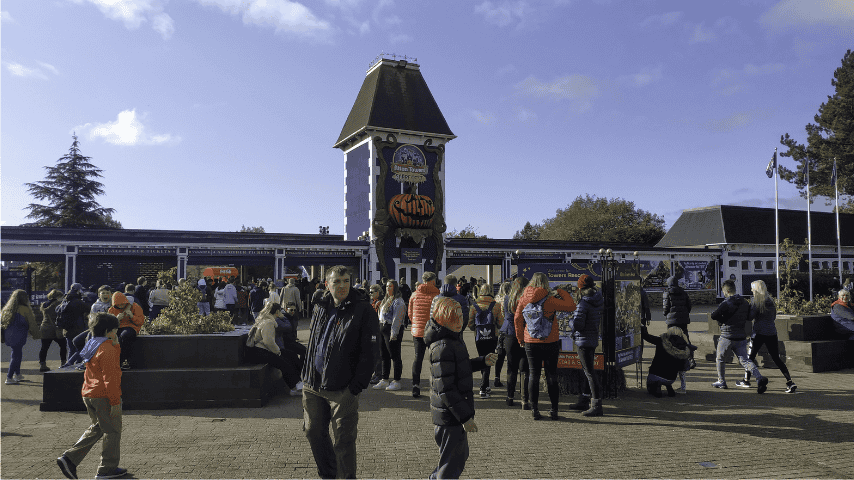
Merlin Entertainments is not simply another leisure company. It is the UK’s largest theme park operator — the organisation behind Alton Towers, Thorpe Park, LEGOLAND Windsor and Chessington World of Adventures. For generations of British families, these parks have formed part of childhood itself. They are places where birthdays are celebrated, exam stress dissolves, and families attempt – if only briefly – to press pause on everyday life.
That cultural significance is precisely why Merlin’s recent overhaul of its Ride Access Pass (RAP) system has triggered such widespread anger and concern.
To Merlin, the change is an operational reform. To many disabled families, disability advocates and equality campaigners, it feels like something far more consequential: a step backwards in accessibility and a stark illustration of how society still misunderstands invisible disabilities.
At the heart of the debate lies a deceptively simple question – what does fairness really look like?
The Policy Change That Sparked a National Debate
For years, Merlin’s Ride Access Pass allowed visitors with disabilities or long-term health conditions to avoid physically queuing for rides by using a virtual waiting system. The pass recognised both visible and non-visible disabilities, including mobility impairments, autism, ADHD, anxiety disorders, sensory processing differences, and chronic medical conditions.
In February 2026, Merlin revised its eligibility criteria. Under the new system, only visitors displaying three specific symbols on the Nimbus Disability Access Card qualify:
- Difficulty Standing
- Level Access
- Urgent Toilet Needs
Previously, a fourth category – Difficulty with Crowds – provided eligibility for many neurodivergent visitors and those with psychological or sensory-related impairments. Its removal has effectively excluded a significant number of people who previously relied on the scheme.
Merlin has stated that the previous system became unsustainable due to rising demand and that a new app-based trial aims to improve fairness, consistency and clarity. The company has emphasised that the policy is under review.
Yet for families suddenly finding themselves excluded, the impact has been immediate – and deeply personal.
Equality Versus Equity: The Principle at Stake
Much of the controversy stems from a broader societal misunderstanding of equality.
Equality means treating everyone identically. Equity recognises that people begin from different circumstances and may require different support to achieve genuinely equal participation.
Equality without equity can produce deeply unequal outcomes.
If every visitor is expected to stand in the same queue regardless of disability, that appears equal on paper. In reality, it disproportionately disadvantages people whose conditions make queuing medically or psychologically unsafe.
The Equality Act 2010 reflects this distinction. The legislation does not require identical treatment. It requires service providers to make reasonable adjustments so disabled individuals are not placed at a substantial disadvantage.
In other words, British equality law is fundamentally rooted in equity.
Without equity, equality becomes symbolic rather than practical.
Why a Queue Can Be a Medical Barrier
To many people, queuing is a routine inconvenience. For others, it is a serious health risk.
Autism and Sensory Processing
Autism is a neurodevelopmental condition affecting sensory processing, communication and environmental regulation. Theme park queues combine multiple sensory stressors: loud and unpredictable noise, crowd compression, flashing lights, sudden announcements and unclear waiting times.
For some autistic individuals, these stimuli trigger sensory overload – a neurological response that can lead to shutdowns, meltdowns, vomiting, migraines, dissociation, or severe anxiety.
ADHD and Emotional Regulation
- ADHD often affects impulse control and attention regulation. Extended static waiting can cause intense neurological discomfort, emotional dysregulation and behavioural distress, particularly in high-stimulation environments.
Anxiety and Trauma Responses
People with generalised anxiety disorder, panic disorder or PTSD may experience acute physiological responses in crowded or confined spaces – chest tightness, breathlessness, tremors and panic attacks.
Chronic and Metabolic Conditions
The risks extend beyond neurodivergence:
- People with diabetes may suffer dangerous hypoglycaemic episodes during long waits.
- Individuals with Crohn’s disease or ulcerative colitis may require immediate toilet access.
- Visitors with postural orthostatic tachycardia syndrome (POTS) may faint after prolonged standing.
These are not preferences or comfort issues. They are clinically recognised health risks.
As disability rights activist Emily Ladau has said:
“Accessibility is not about convenience. It is about civil rights.”
Neurodivergence Is a Spectrum – Not a Single Experience
A crucial but often overlooked reality is that neurodivergent people do not experience environments in identical ways.
Some autistic individuals are sensory seekers. They actively enjoy intense sensory input – high speeds, bright lights, vibration and adrenaline — and may find rides deeply regulating or joyful.
Others are sensory avoidant, experiencing the same stimuli as overwhelming or painful.
What complicates accessibility policy is that someone may be neurologically capable of enjoying the ride itself while being medically unable to tolerate the queue required to reach it.
Accessibility systems must recognise that complexity. Simplified, uniform criteria rarely capture the lived reality of neurodivergence.
How Other Theme Parks Are Addressing Accessibility
The challenges Merlin faces are not unique. Globally, theme parks have grappled with rising demand for accessibility schemes and concerns about misuse.
However, many have moved toward refinement and technological innovation rather than narrower eligibility.
Disney Parks operate the Disability Access Service (DAS), providing return times for guests whose disabilities prevent them from tolerating conventional queues, including neurodevelopmental conditions. Universal Studios provides case-by-case accessibility assessments. Several European parks have adopted advanced virtual queueing systems that reduce physical waiting for all guests — an example of universal design benefiting the entire public.
The international trend suggests accessibility challenges can be addressed through smarter systems rather than reduced recognition of invisible disability.
Voices from Families and Campaigners
Families affected by Merlin’s changes have spoken out forcefully.
One parent wrote:
“My child has ASD and gets high care support awards but is no longer eligible. This feels discriminatory.”
Another questioned:
“Have you checked with lawyers that it’s now allowed to discriminate against neurodivergent disabilities?”
Disability advocate Cherylee Houston has long warned:
“When you remove adjustments, you remove independence.”
Many critics acknowledge Merlin continues to provide sensory rooms, quiet spaces and complimentary carer passes. But they argue these measures do not address the primary barrier: surviving the queue.
Providing support after sensory overload is not the same as preventing it.
The Legal Question
Section 29 of the Equality Act requires service providers to make reasonable adjustments to avoid placing disabled individuals at substantial disadvantage.
The law does not mandate any specific system. However, critics argue that removing recognition of crowd-related disability may risk creating exactly the type of disadvantage the legislation seeks to prevent.
Ultimately, whether Merlin’s policy complies with equality law may depend on proportionality — whether alternative adjustments sufficiently meet disabled visitors’ needs.
But legality and ethical leadership are not always identical.
The Human Consequences
The impact of accessibility policies reaches far beyond one day out.
When disabled families cannot safely attend leisure spaces:
- Children miss shared social experiences
- Teenagers lose opportunities for peer bonding
- Families avoid public environments altogether
- Confidence and independence decline
These experiences shape how disabled young people understand their place in society.
Disability rights pioneer Judith Heumann famously said:
“Change never happens at the pace we think it should. It happens because people push.”
The current backlash reflects that push – not for privilege, but for participation.
Why Equity Creates Real Equality
Equality alone often assumes everyone begins from the same place. Equity acknowledges difference and adjusts systems accordingly so everyone can reach the same destination.
Equity is not special treatment. It is structural fairness.
A wheelchair ramp is equity. It allows equal building access. A virtual queue system for sensory disabilities functions the same way.
Without equity, equality exists only in theory.
With equity, equality becomes lived experience.
A Moment for Innovation – and Leadership
Merlin has stated the revised system is being trialled and reviewed. That review represents a significant opportunity.
Rising demand for accessibility services may reflect growing awareness of disability, improved diagnosis rates and greater confidence among families to seek support. It may not necessarily indicate system abuse.
Technology offers promising solutions:
- Smart timed-entry ride allocations
- Dynamic crowd capacity modelling
- Personalised accessibility profiles
- Hybrid digital queue systems benefiting all visitors
Many global operators are already investing in these approaches.
The question facing Merlin is philosophical as much as operational.
Is accessibility a logistical challenge to minimise – or a commitment to equity that defines modern public service.
The Queue as a Symbol
Theme parks promise escape, excitement and shared joy. Yet sometimes the most revealing part of a park is not the ride — it is the queue.
Queues expose the underlying architecture of inclusion. They reveal who society expects to adapt, who is accommodated, and who is quietly asked to endure more.
Merlin’s Ride Access Pass review will shape far more than operational policy. It will signal how Britain’s leisure industry understands disability in the twenty-first century.
Accessibility is not a perk. It is not a favour. It is not fast-tracking.
It is the bridge that allows disabled people to stand alongside everyone else – not behind them, not apart from them, but with them.
And in a society that claims to value equality, that bridge should never be optional.